Premenstrual Syndrome (PMS): Symptoms, Causes and What Really Helps
30.6.2026 · 3 min reading
The premenstrual syndrome (PMS) affects many women of reproductive age. It encompasses a wide range of physical and psychological complaints that regularly occur in the second half of the cycle — i.e. in the days before menstruation — and disappear after the period begins. PMS is not imaginary, but a medically recognised condition.
The premenstrual syndrome (PMS) affects many women of reproductive age. It encompasses a wide range of physical and psychological complaints that regularly occur in the second half of the cycle — i.e. in the days before menstruation — and disappear after the period begins. PMS is not imaginary, but a medically recognised condition.
What Is Premenstrual Syndrome?
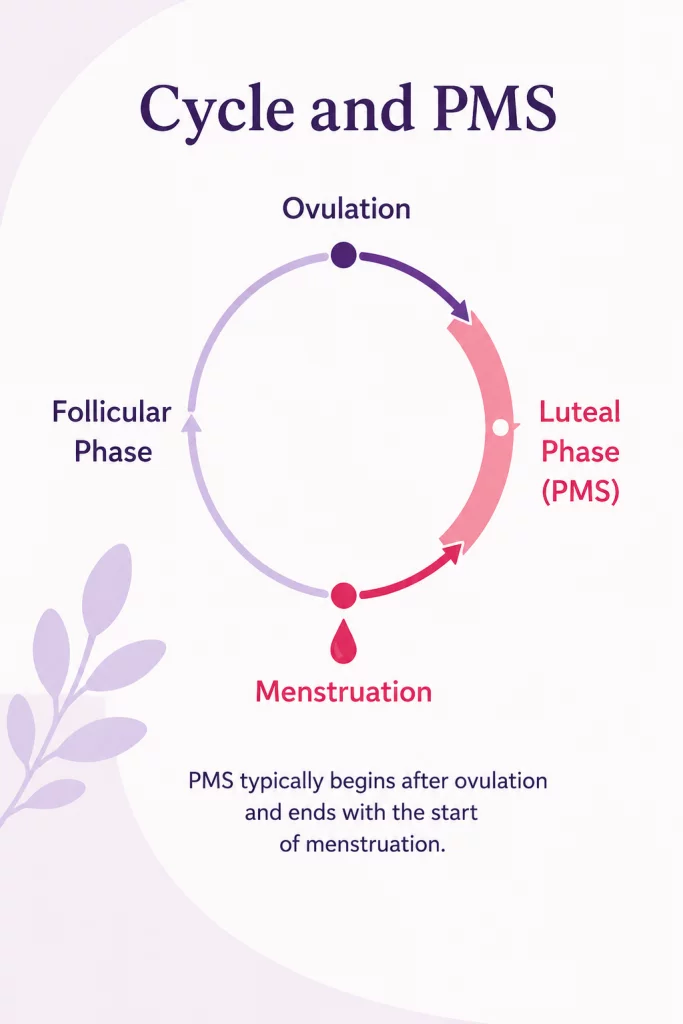
PMS describes a complex of symptoms that recur cyclically and are directly related to the menstrual cycle. The complaints typically begin in the luteal phase (after ovulation) and subside when menstruation begins or shortly afterwards. The exact cause has not yet been fully explained, but hormonal fluctuations — particularly the imbalance between oestrogen and progesterone — play a central role.
PMS Symptoms: Physical and Psychological
PMS can manifest in very different ways. Intensity varies from woman to woman and also from cycle to cycle. Common symptoms include:
Physical Symptoms
- Breast tenderness and pain
- Abdominal pain and cramps
- Bloating and a feeling of fullness
- Headaches and migraines
- Back and joint pain
- Weight gain due to water retention
- Skin changes (acne, oily skin)
- Fatigue and sleep disturbances
Psychological Symptoms
- Mood swings and irritability
- Anxiety and inner restlessness
- Depressive moods
- Difficulty concentrating
- Tearfulness and emotional instability
- Cravings (especially for sweet or salty foods)
PMDD: The Severe Form of PMS
In a small proportion of women (approx. 3–8%), PMS is so pronounced that it significantly impairs everyday life. This form is called Premenstrual Dysphoric Disorder (PMDD). PMDD is characterised by severe psychological complaints and requires targeted medical treatment.
Causes of PMS
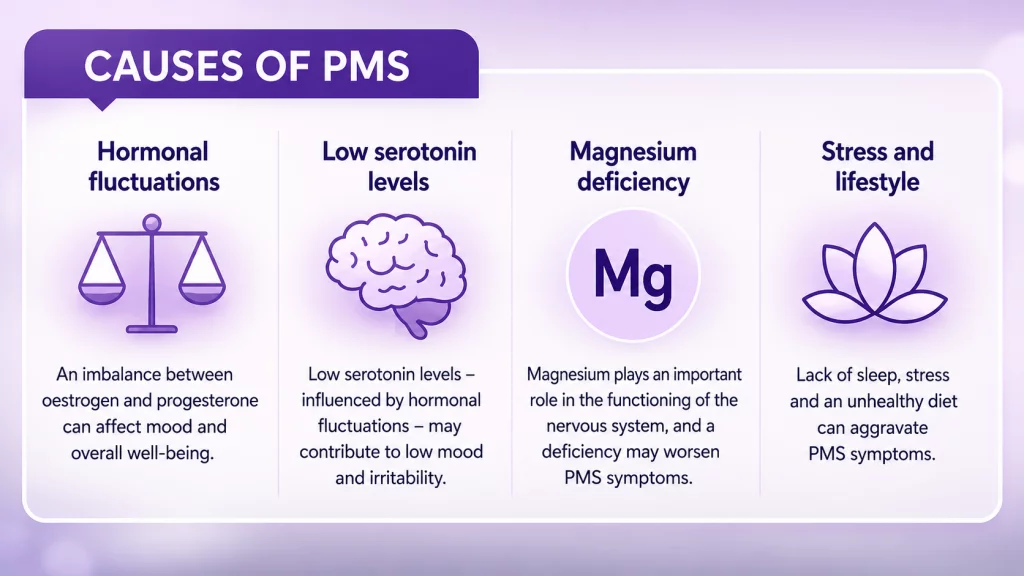
The exact causes of PMS are still the subject of research. The following factors are discussed:
- Hormonal fluctuations: The ratio of oestrogen to progesterone in the second half of the cycle significantly influences mood and well-being.
- Serotonin deficiency: Low serotonin levels — influenced by hormonal fluctuations — can trigger low mood and irritability.
- Magnesium deficiency: Magnesium plays a role in nerve function and can worsen PMS symptoms.
- Stress and lifestyle: Lack of sleep, stress and an unhealthy diet can aggravate PMS.
Treatment and Relief of PMS
There are various ways to alleviate PMS complaints. The choice of therapy depends on the type and severity of symptoms.
Non-Medicinal Measures
- Regular exercise: Sport — especially endurance sports — promotes the release of endorphins and demonstrably reduces PMS complaints.
- Dietary adjustments: Less sugar, caffeine, alcohol and salt; more whole grains, vegetables and legumes.
- Stress reduction: Yoga, meditation, breathing exercises and adequate sleep help to alleviate PMS symptoms.
- Heat: Heat patches or a hot water bottle can relieve cramps and back pain.
Dietary Supplements
- Magnesium: Can reduce cramps, headaches and mood swings
- Vitamin B6: Supports serotonin balance and can alleviate emotional complaints
- Vitamin E: Can relieve breast tenderness and physical complaints
- Chaste tree (Vitex agnus-castus): Herbal remedy with a hormonally balancing effect
Medical Treatment
In cases of severe symptoms, medical treatment may be necessary. Options include hormonal contraceptives (the pill), antidepressants (SSRIs) for PMDD or specific hormone therapies. These should always be coordinated with a doctor.
When to See a Doctor?
If your PMS symptoms are so severe that they affect your everyday life, work or relationships, you should seek medical help. A cycle diary — in which you note symptoms, their intensity and timing — helps your doctor with diagnosis.
At our clinic we offer comprehensive gynaecological consultations and help you find the right treatment for your individual complaints.
PMS and the Desire to Have Children
PMS can be an indication of hormonal imbalances that also affect fertility. If you suffer from severe PMS and also have a desire to have children, we recommend targeted hormonal clarification. Our fertility team will be happy to advise you.
Are you suffering from PMS and would like to know more? Make a consultation appointment at our clinic now.